RumINSIGHT Report
The RumINSIGHT report provides dairies that process with VAS/AgSource insight into the fat-related components in their milk production. Milk fat is comprised of different types of fatty acid, which the RumINSIGHT report organizes into distinct categories to make the information easier to visualize. For more information, see RumINSIGHT Report. You can find this feature under the Insights menu.
The amount of fat in the milk your dairy produces impacts the amount you're paid for that milk. Milk fat is comprised of different types of fatty acids, which can be categorized into three main groups:
- De novo fatty acids originate from the production of the chemicals butyrate and acetate in the rumen (the largest stomach compartment of a cow), and so are an indicator of rumen functioning. De novo fatty acids are the greatest driver of bulk tank butterfat.
- Mixed fatty acids originate from the diet or from synthesis within the cow.
- Preformed fatty acids are derived from the diet or adipose tissue (i.e., fat tissue) from the cow. In early lactation, preformed fatty acid levels are typically high in the milk as cows utilize their body fat to meet the energy needs for milk production.
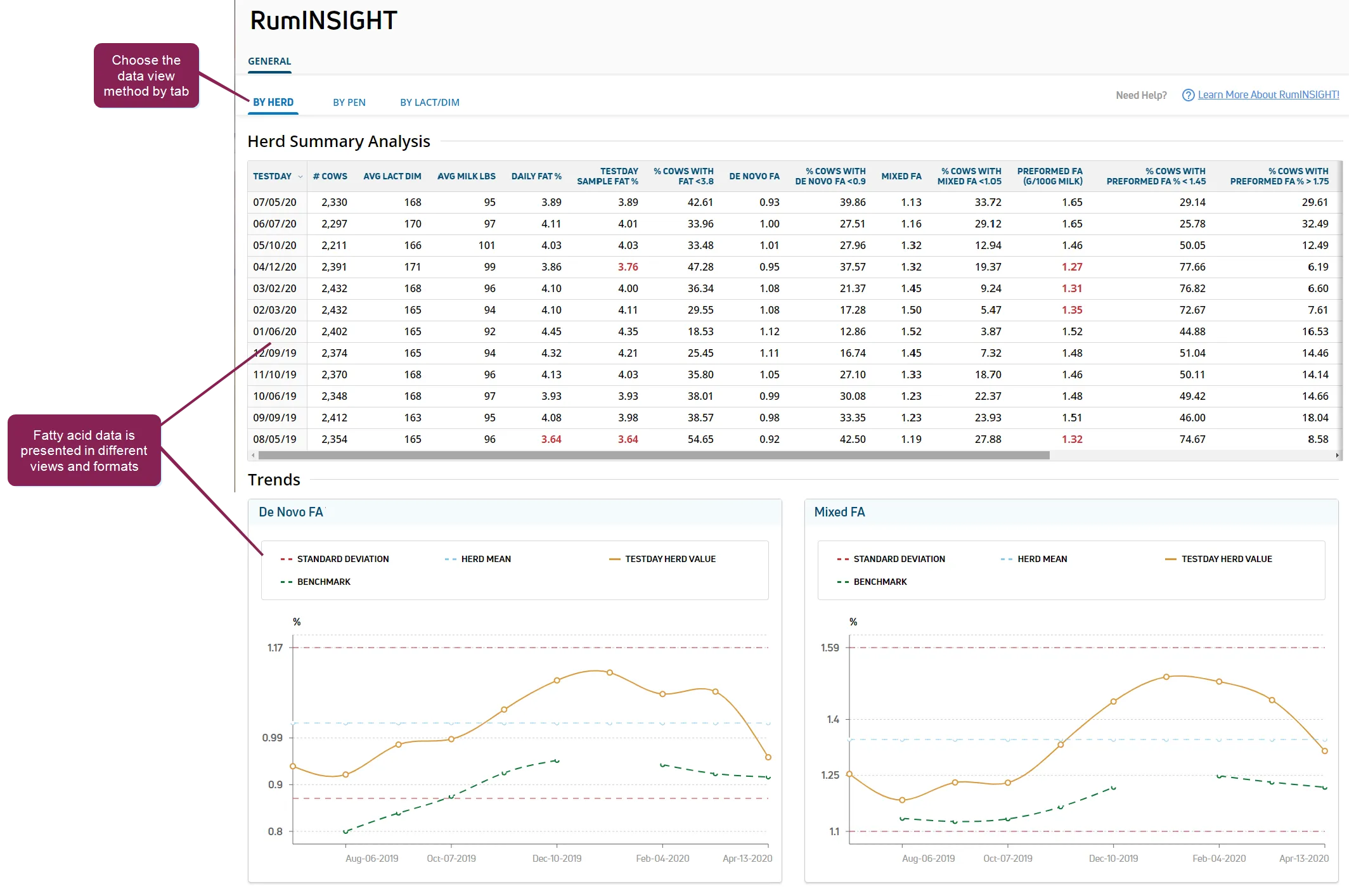
Data for the three fatty acid groups of the RumINSIGHT report, along with related information (such as the number of cows, days in milk, etc.), is organized into distinct categories to make the information easier to visualize. These categories are presented in the following tabs:
- The By Herd tab displays both summary and trend data for the three fatty acid types for the entire herd. It also presents general fat and protein data. See View RumINSIGHT Data by HerdView RumINSIGHT Data by Herd.
- The By Pen tab displays detailed fatty acid data for each pen. See View RumINSIGHT Data by PenView RumINSIGHT Data by Pen.
- The By Lact/DIM tab displays detailed fatty acid data broken down by lactation and stage of lactation. See View RumINSIGHT Data by Lactation and DIMView RumINSIGHT Data by Lactation and DIM.