Command Reference Guide
Commands must follow a PULSE-specific format, which may vary from DairyComp 305's command language and structure. Expand the sections below to learn more:
To run multiple commands simultaneously, use an exclamation point (!) to separate commands.
Command text is not case-sensitive.
PULSE interprets the order of month and day based on your User ProfileUser Profile Date format setting.
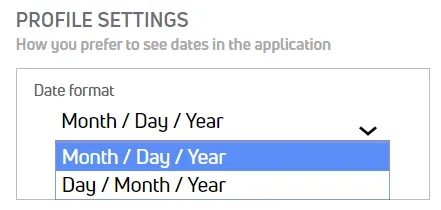
The year may be two or four digits, and month and day may be one or two digits. Use a forward slash (/) or period (.) to separate year, month, and day. Dates may be specified in any of the following formats:
- yyyy/mm/dd or yyyy.mm.dd
- mm/dd/yy or mm.dd.yy
- mm/dd/yyyy or mm.dd.yyyy
- dd/mm/yy or dd.mm.yy
- mm/dd or dd/mm (assumes the current year) | * yyyy/m/d or yyyy.m.d
- m/d/yy or m.d.yy
- m/d/yyyy or m.d.yyyy
- d/m/yy or d.m.yy
- m/d or d/m (assumes the current year) |
For instance, September 17, 2019, can be formatted as:
- 2019/09/17, 9.17.19, 9/17/19, or 9/17 if your date format is set to Month/Day/Year
- 2019/17/09, 17.9.19, 17/9/19, or 17/9 if your date format is set to Day/Month/Year
DairyComp and PULSE accommodate date shortcuts to speed up the typing of commands. Date shortcuts may be used for any date items and work as follows:
- The number is the date in the current month (if today or already occurred)
- The number is a date in the previous month (if not yet occurred)
For instance, if you enter MKDAT=3, and today is October 3, then the results show milk withdrawals ending today. If you enter FDAT>14 and today is October 1, the results include animals with fresh dates of September 15 through October 1.
Double quotes (") are required to identify a string in the command line. For instance, CODA="TEST".
The animal ID is always included in LIST (SHOW) results, even if not specified in the command.
Sort and condition keywords (BY, DOWNBY, FOR) must follow a prescribed order in LIST (SHOW) and SUM commands.
IMPORTANT: LIST (SHOW) commands require that the FOR keyword is typed before the BY or DOWNBY keyword. SUM commands require that the FOR keyword is typed after the BY or DOWNBY keyword.
AND is implied between multiple conditional items. For instance, FORLACT>0 DCC>220 DDAT=2019/07/30 includes all results where the following is true: lactation number is greater than zero AND days carrying calf is less than 220 days AND due date is July 30, 2019.
Use a semicolon (;) to indicate OR. For instance, PEN=1;3;5 includes pens 1 OR 3 OR 5.
To use compound OR conditions, no semicolon (;) is required. Separate each condition with parenthesis (). For instance, FOR(LACT>0 DDAT=2019/07/30) (COD1>0 COD2=0) includes results where the following is true: lactation number is greater than zero and due date is July 30, 2019 OR COD1 is greater than zero and COD2 is equal to zero.
Extra spaces between items are ignored.
In PULSE command line, any switches must immediately follow the command word. The following switches are currently supported in the specified command(s):
Switch | Definition | Command(s) | Example |
|---|---|---|---|
\B | Includes results for both live and dead animals. Without the switch, command results include live animals only. | COUNTLIST (SHOW)SUM | LIST \B ID LACT DIM RPRO ARDAT FOR FDAT>-7 BY LACTCapture live and dead animal data for recently freshened animals by lactation. |
\D | Limits results to dead cows only. | COUNTLIST (SHOW)SUM | COUNT \D FOR LACT=1 ARDAT>-90Capture total number of dead animals in their first lactation in the last 90 days. |
\S | Sets the standard deviation calculation to use sample values. Without the switch, PULSE calculates population standard deviation. | SUM | SUM \S MILK PCTF PCTS LGSCC BY lact FOR LACT>0Analyze sample standard deviation data for milk composition and quality by lactation. |
\Z | Includes zero values in averages and standard deviation calculations. Without the switch, average, standard deviation, mode, and median calculations include non-zero values only. | SUM | SUM \Z TKET BY LCTGP FOR FDAT>-365Analyze the number of times ketosis was diagnosed by lactation group for all animals that calved in the last year. |
- Dairy Reports/WorklistsDairy Reports/Worklists
- Command LineCommand Line
- LIST (SHOW) CommandLIST (SHOW) Command
- SUM CommandSUM Command
- COUNT CommandCOUNT Command